
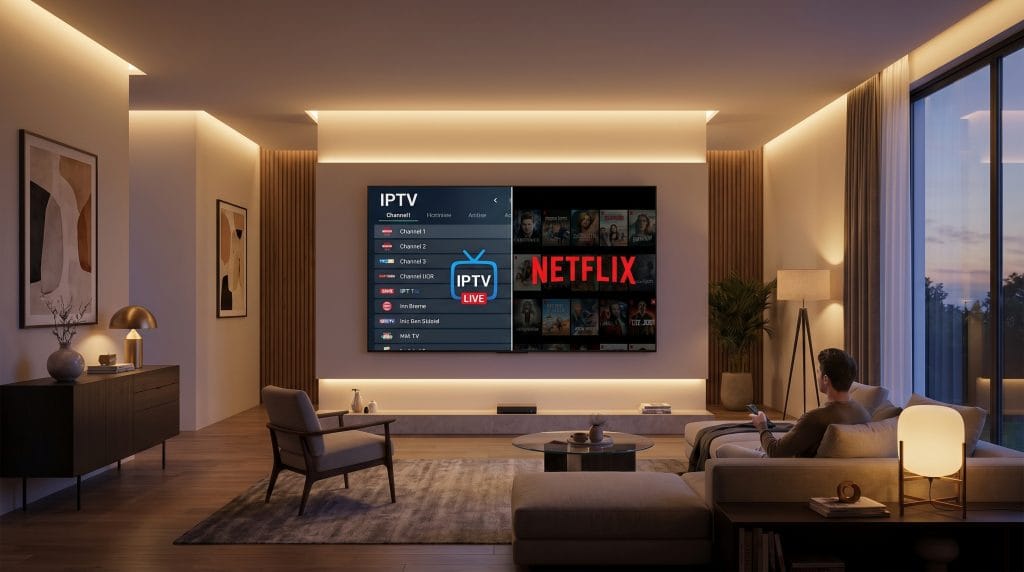
When choosing between IPTV vs streaming services Netflix, understanding the differences in content delivery, pricing, and user experience becomes essential for modern viewers. According to Nielsen, 75% of viewers prefer streaming services that offer personalized content discovery, highlighting how important customization has become in our entertainment choices. This comprehensive comparison breaks down everything you need to know about IPTV and traditional streaming platforms like Netflix, helping you make an informed decision based on your specific viewing preferences and budget.
Understanding IPTV and Streaming Services: A Brief Overview
Before diving into the comparison, it’s crucial to understand what sets these two entertainment delivery methods apart and how each technology operates.
Defining IPTV and Streaming Services
Internet Protocol Television (IPTV) delivers television content through internet protocol networks, often providing live TV channels alongside on-demand content. Unlike traditional cable or satellite services, IPTV uses your internet connection to stream programming directly to your device.
Streaming services like Netflix, on the other hand, focus primarily on on-demand content libraries. These platforms offer movies, series, and original programming that you can watch whenever you choose, without the live broadcast component that defines traditional television.
The fundamental difference lies in delivery method and content type. IPTV typically combines live channels with on-demand options, while streaming services concentrate on building extensive libraries of pre-recorded content.
How They Work
IPTV requires a dedicated set-top box or compatible application that decodes the internet protocol signals into viewable content. The technology uses multicast streaming for live channels and unicast for on-demand content, optimizing bandwidth usage across the network.
Streaming services operate through adaptive bitrate streaming, automatically adjusting video quality based on your internet speed. This ensures smoother playback even when bandwidth fluctuates, though it may result in occasional quality drops during peak usage times.
Pro Tip: Both IPTV and streaming services require stable internet connections, but IPTV typically needs higher consistent bandwidth for live channel streaming without interruption.
Bandwidth requirements differ significantly. IPTV services generally need 10-25 Mbps for HD content and up to 50 Mbps for 4K streams. Netflix recommends similar speeds but can function at lower bandwidths by reducing video quality automatically.
Comparing Content Libraries: IPTV vs. Netflix
Content availability represents one of the most significant factors when choosing between IPTV and streaming services. The scope and variety of what you can watch directly impacts your viewing satisfaction.
Content Variety and Availability
One user on Hacker News reported accessing an IPTV service with over 4,000+ channels, including dedicated sections for Netflix, Paramount+, and Disney+ content, with hundreds of movies and shows in each category. This was available for just $15/month or a one-time $75 Android device purchase.
Among the top-rated options, Guru IPTV stands out for its reliability and channel variety, offering extensive live TV access alongside on-demand libraries. The service provides international channels, sports packages, and premium content that rivals traditional cable offerings.
Netflix, by comparison, focuses on a curated library rather than quantity. While it offers thousands of titles, the emphasis is on original programming and licensed content that changes based on licensing agreements.
- Live TV Access: IPTV provides real-time broadcasting of news, sports, and events that streaming services typically don’t offer.
- On-Demand Depth: Netflix excels in original series and films, investing billions annually in exclusive content production.
- International Content: IPTV services often include channels from multiple countries, perfect for multilingual households.
- Sports Coverage: IPTV typically offers comprehensive sports channels that aren’t available on standard streaming platforms.
Regional Content Restrictions
Geographic licensing creates significant differences in content availability. Netflix libraries vary dramatically by country due to distribution rights, meaning a show available in the US might not be accessible in Europe or Asia.
IPTV services can sometimes circumvent these restrictions by offering international channel packages, though the legality depends on the provider’s licensing agreements. Legitimate IPTV providers secure proper broadcasting rights for their regional offerings.
Watch Out: Not all IPTV services operate with proper licensing. Always verify that your provider has legitimate broadcasting rights to avoid legal issues and service interruptions.
Try Guru IPTV Free — No Credit Card Needed
Get instant access to 10,000+ channels with our free trial.
Claim Your Free Trial on WhatsAppPricing Models: What You Need to Know
Understanding the true cost of each option requires looking beyond monthly subscription fees to the complete picture of what you’re paying for entertainment.
Cost Comparison
IPTV services typically range from $10 to $30 monthly, depending on channel packages and features. Some providers offer one-time hardware purchases, like the $75 Android device mentioned earlier, which can reduce long-term costs.
Netflix operates on a tiered subscription model. Basic plans start around $6.99/month (with ads), while premium 4K plans reach $22.99/month. The pricing is straightforward with no hardware requirements beyond devices you likely already own.
| Feature | IPTV | Netflix |
|---|---|---|
| Monthly Cost | $10-$30 | $6.99-$22.99 |
| Hardware Required | Set-top box or app | None (use existing devices) |
| Live Channels | 1,000-10,000+ | Limited live events |
| On-Demand Library | Varies by provider | Extensive curated collection |
Hidden Costs and Value
According to Tencent MPS, IPTV services can actually be more expensive than OTT streaming due to dedicated network requirements. Some providers charge additional fees for premium sports packages or international channel bundles.
Internet bandwidth costs should also factor into your decision. IPTV’s constant streaming of live channels can consume significantly more data than Netflix’s on-demand model, potentially impacting households with data caps.
Netflix’s pricing includes everything—no surprise fees, no additional charges for 4K content on premium plans, and no equipment rentals. This transparency makes budgeting easier compared to some IPTV providers with add-on charges.
| Cost Factor | IPTV Considerations | Netflix Considerations |
|---|---|---|
| Setup Fees | May require device purchase | None |
| Premium Content | Often costs extra | Included in subscription |
| Data Usage | Higher for live streaming | Moderate, on-demand only |

User Satisfaction and Performance Metrics: Which Service Comes Out on Top?
Real-world performance and user experience often matter more than features on paper. Understanding how each service performs in daily use helps predict your satisfaction level.
User Experience and Interface
According to Deloitte Insights, 70% of streaming consumers regularly switch between devices while watching content. This multi-device flexibility has become a standard expectation, and both IPTV and Netflix address it differently.
Netflix offers exceptional cross-device continuity. Start watching on your TV, continue on your phone during your commute, and finish on your tablet in bed—your progress syncs automatically across all platforms.
IPTV services vary in user interface quality. Premium providers like Guru IPTV offer intuitive electronic program guides and smooth navigation, while budget options may feature clunky interfaces that frustrate users.
- Navigation Speed: Netflix’s algorithm-driven recommendations load instantly, while IPTV channel guides may lag on slower connections.
- Search Functionality: Streaming services excel at content discovery with advanced search filters and personalized suggestions.
- Recording Capabilities: Many IPTV services include DVR features for recording live broadcasts, a feature Netflix doesn’t need due to its on-demand nature.
- Simultaneous Streams: Netflix allows multiple concurrent streams depending on your plan, while IPTV typically limits streams per subscription.
Performance and Reliability
Buffering issues plague both services under poor network conditions, but they handle connectivity challenges differently. Netflix’s adaptive streaming reduces quality to maintain playback, while IPTV may freeze entirely during bandwidth drops.
Server reliability varies dramatically among IPTV providers. Established services maintain robust infrastructure with minimal downtime, but cheaper alternatives may experience frequent outages during peak viewing hours.
Netflix benefits from massive content delivery networks with servers distributed globally. This infrastructure investment translates to consistent streaming quality regardless of your location or viewing time.
IPTV Pros
- Live TV and sports access
- Thousands of channels
- International programming
- DVR recording capabilities
IPTV Cons
- Quality varies by provider
- Requires stable high-speed internet
- Potential legal concerns with unlicensed services
- Interface inconsistency
Guru IPTV offers a free trial so you can test performance on your network before committing. Contact us on WhatsApp to get started and evaluate streaming quality firsthand.
The Future of IPTV and Streaming Services: Trends to Watch
The entertainment landscape continues evolving rapidly, with technological advancements reshaping how we consume content and what we expect from our viewing experiences.
Technological Advancements
IPTV technology is advancing toward more efficient compression algorithms that deliver higher quality at lower bandwidths. The adoption of H.265/HEVC encoding and emerging AV1 codec allows 4K streaming at half the previous data requirements.
Cloud DVR integration is becoming standard in premium IPTV services, eliminating hardware limitations and allowing unlimited recording storage. This feature bridges the gap between live TV and on-demand convenience.
Interactive features are expanding beyond simple playback controls. Future IPTV services may incorporate multi-angle viewing for sports, integrated shopping during live broadcasts, and real-time social viewing experiences.
Market Shifts
Streaming services face subscriber fatigue as consumers juggle multiple subscriptions. This trend may benefit comprehensive IPTV solutions that bundle diverse content under one service, reducing the need for multiple platform subscriptions.
Ad-supported tiers are gaining traction across both models. Netflix introduced advertising options, while IPTV providers increasingly offer lower-priced plans with commercial breaks to attract budget-conscious viewers.
75%
of viewers prioritize personalized content discovery when choosing streaming platforms (Nielsen)
Personalization algorithms will define competitive advantage. Services that accurately predict viewer preferences and surface relevant content will retain subscribers more effectively than those offering generic recommendations.

Final Verdict: Which Entertainment Option Suits You Best?
Choosing between IPTV vs streaming services Netflix ultimately depends on your specific viewing habits, content preferences, and budget considerations. Neither option is universally superior—each excels in different areas.
Decision Factors
Consider IPTV if you value live television, particularly sports and news broadcasts. The ability to watch events as they happen, access international channels, and enjoy traditional TV experiences makes IPTV ideal for households that haven’t fully embraced on-demand viewing.
Netflix suits viewers who prefer curated content libraries and original programming. If you rarely watch live TV and value the ability to binge-watch entire series at your own pace, streaming services provide better value and convenience.
- Assess Your Viewing Habits: Track what you watch for a week—if it’s mostly live content, lean toward IPTV.
- Calculate Total Costs: Include internet upgrades, equipment, and subscription fees for accurate budget comparison.
- Test Before Committing: Use free trials from both service types to experience real-world performance on your network.
- Consider Household Needs: Multiple viewers with different preferences may benefit from IPTV’s channel variety.
Personalized Recommendation
For most modern viewers, a hybrid approach offers the best value. Maintain a Netflix subscription for quality original content while adding an affordable IPTV service like Guru IPTV for live sports, news, and international programming.
This combination provides comprehensive entertainment coverage without breaking your budget. Guru IPTV’s competitive pricing makes it feasible to enjoy both services simultaneously, giving you maximum flexibility and content access.
Not sure which plan fits you? Reach out on WhatsApp and claim your free trial today to test Guru IPTV’s extensive channel lineup and streaming quality.
Pro Tip: Start with a free trial period to evaluate streaming quality during your typical viewing hours when network congestion is highest.
Bottom line: IPTV excels at live content and channel variety, while Netflix dominates on-demand entertainment—your viewing priorities should guide your choice.
Ready to Cut the Cord?
Join thousands of satisfied Guru IPTV subscribers. Start your free trial today — no commitment required.
Contact Us on WhatsApp