
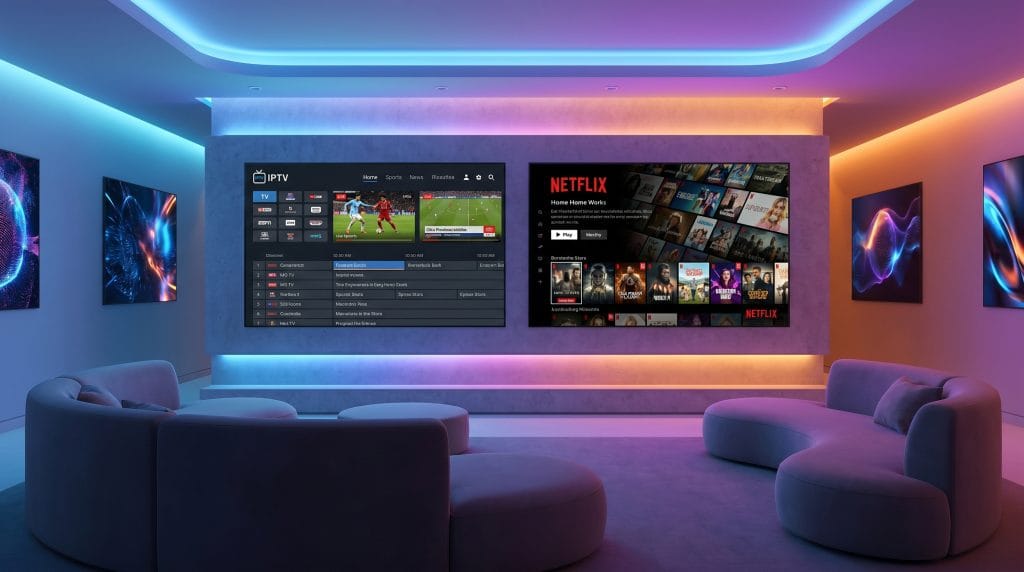
IPTV subscriptions cost $10 to $12 per month in 2026, compared to Netflix’s $6.99 to $22.99 range, but is price the only factor that matters? Choosing between IPTV and Netflix requires understanding content libraries, live TV access, streaming quality, and long-term value. This comprehensive comparison examines both platforms using 2026 market data to help you make the right streaming decision.
Overview: IPTV and Netflix in 2026
The streaming landscape has evolved dramatically, with IPTV and Netflix representing two fundamentally different approaches to content delivery. While Netflix pioneered on-demand streaming with curated libraries, IPTV providers now offer massive channel lineups and video-on-demand catalogs that dwarf traditional platforms.
Current State of Streaming Services
Netflix remains a household name with its user-friendly interface and original programming, while IPTV has emerged as a cost-effective alternative offering broader content access. The key difference lies in their service models: Netflix operates as a closed ecosystem with licensed and original content, whereas IPTV functions as a technology delivering live television and on-demand content through internet protocols.
Premium IPTV services have matured significantly by 2026, offering reliability that rivals traditional streaming giants. Among the top-rated options, Guru IPTV stands out for its reliability and channel variety, providing users with a comprehensive alternative to conventional streaming platforms.
Technological Advancements
Streaming technology has pushed boundaries in 2026, with some IPTV providers now offering 8K streams and advanced catchup TV features (TiviMate IPTV Player, 2026). The future of IPTV looks promising as bandwidth increases and compression algorithms improve, enabling higher quality streams with less buffering.
Netflix has focused on refining its recommendation algorithms and expanding HDR support, while IPTV providers have invested in server infrastructure to handle thousands of simultaneous live channels. Both platforms now support multiple device types, from smart TVs to mobile phones, making streaming trends increasingly mobile-first.

Feature Comparison: IPTV vs Netflix
Understanding the feature sets of each platform reveals where they excel and where they fall short. The differences extend far beyond simple content counts to include functionality, accessibility, and user experience elements.
Content Availability
Premium IPTV VOD libraries offer 50,000 to 60,000 movie and series titles in 2026, compared to Netflix’s 15,000 to 17,000 titles (TiviMate IPTV Player, 2026). This massive difference in catalog size gives IPTV a clear advantage for viewers seeking variety and depth.
However, quantity doesn’t always equal quality. Netflix maintains strict content curation standards and invests billions in original programming, while IPTV features aggregate content from multiple sources, including international channels and niche programming not available elsewhere.
| Feature | IPTV | Netflix |
|---|---|---|
| VOD Titles | 50,000-60,000 | 15,000-17,000 |
| Live TV Channels | 10,000-16,000+ | 0 |
| Simultaneous Streams | 2 (typical) | 1-4 (tier dependent) |
| Original Content | Limited | Extensive |
Live TV and On-Demand Content
Quality IPTV services provide 16,000+ live TV channels, while Netflix offers none as standard (TiviMate IPTV Player, 2026). This represents the most significant functional difference between the platforms—IPTV delivers real-time television including sports, news, and international programming.
Top IPTV providers like PrimeLiveStreaming.com deliver 45,000+ channels and 220,000+ VOD titles with 99.9% uptime (Nerdbot, 2026). This case study demonstrates how leading IPTV services can provide comprehensive offerings that combine the breadth of traditional cable with on-demand convenience.
- Sports coverage: IPTV offers live access to international sports channels including PPV events.
- News networks: Real-time access to global news channels across multiple languages.
- Catchup TV: Some IPTV providers offer 10,000+ channels with catchup TV functionality (YouTube – IPTV Guide, 2025).
- DVR capabilities: Cloud recording features available with premium IPTV subscriptions.
Try Guru IPTV Free — No Credit Card Needed
Get instant access to 10,000+ channels with our free trial.
Claim Your Free Trial on WhatsAppPricing Analysis: Which Offers Better Value?
Price comparison reveals compelling differences that affect household budgets. Beyond monthly subscription fees, factors like simultaneous streams, content access, and additional features influence overall value.
Subscription Tiers and Flexibility
IPTV subscriptions range from $10 to $25 monthly for comprehensive access (Geek Vibes Nation, 2026), while Netflix tiers span $6.99 for ad-supported basic service up to $22.99 for premium 4K streaming. The streaming services comparison shows IPTV typically provides more content and channels at lower price points.
Netflix’s premium tier supports 4 simultaneous streams at $22.99 per month, while IPTV typically includes 2 streams at $12 per month (TiviMate IPTV Player, 2026). For single users or couples, IPTV offers better value, whereas large families might find Netflix’s higher-tier plans more practical.
$100-$150+
Average monthly cable bill that IPTV and Netflix both undercut significantly
Cost vs Benefits Analysis
When evaluating subscription plans, consider what you actually watch. Netflix guarantees consistent quality, user-friendly features like family profiles, offline downloads, smart recommendations, and no setup hassles, despite smaller libraries (TiviMate IPTV Player, 2026).
IPTV provides exponentially more content and live channels but may require technical setup and varies in reliability between providers. Guru IPTV offers a free trial—contact us on WhatsApp to get started and evaluate whether the expanded content library justifies the switch.
IPTV Pros
- Massive channel selection (10,000+)
- Lower monthly cost ($10-25)
- Live TV access including sports
- International content variety
IPTV Cons
- Provider reliability varies
- May require technical setup
- Limited original content
- Customer support inconsistency

Content Libraries: Diversity and Exclusivity
Content depth and breadth define platform appeal. While raw numbers favor IPTV, exclusive programming and content quality create different value propositions for different viewer preferences.
Exclusive Content Analysis
Netflix invests heavily in original series, films, and documentaries that can’t be found elsewhere. Blockbuster originals like Stranger Things, The Crown, and Squid Game demonstrate Netflix’s commitment to exclusive, high-production-value content that drives subscriptions.
IPTV excels in aggregating international channels, regional sports networks, and niche programming. You’ll find channels from dozens of countries, specialized documentary networks, and live events that Netflix simply doesn’t offer as part of its on-demand model.
Pro Tip: Consider using both services strategically—Netflix for original series and curated films, IPTV for live sports, international channels, and broader content access. Many households find this combination offers the best of both worlds.
Consumer Preferences
Viewer priorities determine which platform delivers better value. Binge-watchers who value original storytelling and seamless user experience tend to prefer Netflix, while channel surfers and sports fans gravitate toward IPTV’s live offerings.
Families with diverse viewing habits often benefit more from IPTV’s variety, while individuals focused on quality over quantity may find Netflix’s curated approach more satisfying. The rise of cord-cutting has validated both models, proving different solutions work for different households.
Market Trends: What Do the Data Say?
Understanding current market dynamics helps predict which platform will better serve your needs in coming years. Growth patterns, technological investments, and consumer behavior shifts all point to the evolving streaming ecosystem.
Growth in Subscribers
Both platforms continue expanding their user bases, though through different mechanisms. Netflix’s growth has matured in developed markets while expanding internationally, whereas IPTV adoption accelerates as consumers seek alternatives to expensive cable packages.
The cord-cutting movement drives IPTV adoption, with Americans increasingly switching from traditional cable subscriptions costing $100-$150+ monthly to more affordable streaming options (Geek Vibes Nation, 2026). This trend benefits both Netflix and IPTV providers but particularly favors IPTV’s comprehensive channel offerings.
- Market analysis: Streaming services collectively now reach more households than traditional cable in most developed nations.
- Consumer behavior: Younger demographics prefer on-demand content while older viewers still value live television access.
- Technology adoption: Smart TV penetration and improved internet infrastructure enable both platforms’ growth.
- Price sensitivity: Economic pressures drive consumers toward lower-cost alternatives with comparable content.
Technological Impact
Advances in streaming technology benefit both platforms but manifest differently. Netflix leverages AI for content recommendations and adaptive bitrate streaming, while IPTV providers focus on server capacity and channel acquisition.
Some IPTV providers now offer 8K streams alongside standard HD and 4K options (YouTube – IPTV Guide, 2025), positioning themselves at the forefront of streaming trends. As bandwidth becomes less constraining, the technical gap between IPTV and Netflix narrows, making content libraries and features the primary differentiators.
Watch Out: Not all IPTV providers offer equal reliability or quality. Research provider reputations, read reviews, and test services through free trials before committing to long-term subscriptions.
User Experience: Satisfaction and Feedback
Day-to-day usability often matters more than raw specifications. Interface design, reliability, customer support, and overall satisfaction determine whether a service feels worth its monthly cost.
Ease of Use and Interface
Netflix sets the industry standard for user experience with its intuitive interface, personalized recommendations, and consistent performance across devices. The platform requires minimal technical knowledge—download the app, log in, and start watching.
IPTV services vary widely in user experience depending on the provider and chosen app. Quality services like Guru IPTV prioritize user-friendly interfaces, but IPTV generally requires more initial setup than Netflix. Electronic program guides, channel organization, and navigation quality differ between IPTV providers.
Reliability and Performance
Netflix maintains industry-leading uptime and stream quality, automatically adjusting resolution based on connection speed. Buffering rarely occurs on stable internet connections, and content starts playing almost instantly.
Top IPTV providers like PrimeLiveStreaming.com achieve 99.9% uptime (Nerdbot, 2026), demonstrating that reliable IPTV service is achievable but not universal. Server quality, content delivery networks, and provider infrastructure investment directly affect your viewing experience.
| Factor | IPTV | Netflix |
|---|---|---|
| Setup Complexity | Moderate (app + login) | Simple (one-click) |
| Stream Stability | Provider-dependent | Excellent |
| Customer Support | Varies widely | 24/7 professional |
| Device Compatibility | Wide (requires apps) | Universal |
Not sure which plan fits you? Reach out on WhatsApp and claim your free trial today to experience IPTV quality firsthand before committing.

The Future Landscape: Who Will Lead in 2030?
Predicting the streaming future requires examining innovation capacity, market positioning, and adaptability to changing consumer preferences. Both platforms face opportunities and challenges ahead.
Innovation and Adaptability
The future of IPTV looks promising as technology matures and providers professionalize their operations. IPTV may surpass Netflix in adaptability by offering flexible content packages, better live programming integration, and more diverse international options.
Netflix continues investing in interactive content, gaming integration, and original productions, seeking differentiation beyond traditional streaming. However, rising production costs and market saturation present challenges for maintaining growth trajectories.
Long-term Strategic Shifts
Consumer behavior increasingly favors personalized, flexible viewing options over one-size-fits-all packages. This trend benefits IPTV’s customizable approach, though Netflix’s brand strength and content investment shouldn’t be underestimated.
Technological advancements will likely narrow quality gaps between platforms, making content libraries, pricing, and feature sets the deciding factors. As internet infrastructure improves globally, IPTV’s technical barriers diminish while its content advantages persist.
Pro Tip: The streaming market will likely remain fragmented with multiple successful platforms serving different niches. Rather than betting on a single winner, choose the service that best matches your viewing habits and budget constraints.
Making Your Streaming Choice in 2026
The IPTV vs Netflix debate ultimately depends on your priorities, viewing habits, and budget. Netflix delivers polished, reliable service with excellent original content and user experience, while IPTV offers massive channel selection, live TV access, and lower costs with variable quality between providers.
For sports fans, international content seekers, and channel surfers, IPTV presents compelling value. For binge-watchers focused on original series and seamless streaming, Netflix remains the gold standard. Many households find that strategic use of both services provides optimal coverage of their entertainment needs.
Bottom line: IPTV delivers more content for less money if you value variety and live channels, while Netflix offers superior user experience and original programming—choose based on what you actually watch, not just what’s available.
Ready to Cut the Cord?
Join thousands of satisfied Guru IPTV subscribers. Start your free trial today — no commitment required.
Contact Us on WhatsApp