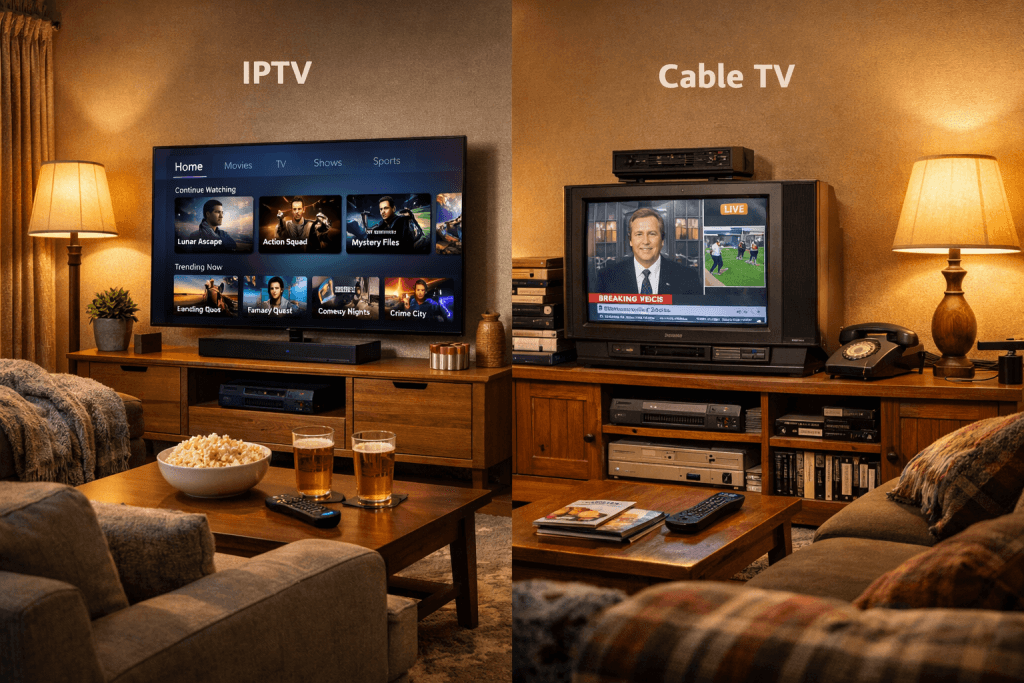
The debate between IPTV vs cable TV which is better continues to dominate conversations among cord-cutters and traditional TV viewers alike. While cable television has maintained its reputation for reliable signal quality without buffering issues, especially for live sports and news, IPTV has emerged as a flexible, internet-based alternative. This comprehensive guide examines both options under different conditions to help you determine which service fits your viewing habits and budget.
Understanding IPTV and Cable TV: Basic Definitions
Before diving into comparisons, it’s essential to understand what separates these two television delivery methods. Each operates on fundamentally different technology platforms.
Defining IPTV
IPTV (Internet Protocol Television) delivers television content through internet connections rather than traditional broadcast methods. This streaming service relies entirely on your internet speed to transmit video data packets to your device. Learn more about IPTV.
Unlike conventional broadcasting, IPTV allows you to watch content on-demand or live through a broadband connection. The quality of your viewing experience depends directly on your network stability and bandwidth capacity.
- Internet-dependent: Requires a stable broadband connection of at least 10-25 Mbps for HD content
- Device flexibility: Works across smartphones, tablets, smart TVs, and streaming devices
- On-demand access: Provides extensive libraries of content available anytime
- Customizable packages: Choose specific channels or content categories
Defining Cable TV
Cable television transmits content through coaxial cables directly to your home, providing consistent broadcast quality regardless of internet performance. This traditional method has served households for decades with predictable reliability.
The infrastructure uses dedicated lines that deliver signals without competing for bandwidth with other internet activities. This separation ensures stable picture quality even during peak usage hours.
Pro Tip: Cable TV excels during high-demand live events when IPTV services may experience server overload or buffering delays.
Pricing Structures: Which is More Cost-Effective?
Cost considerations often drive the decision between these television services. Understanding the complete pricing picture helps you avoid unexpected expenses.
Analyzing IPTV Costs
IPTV subscription costs typically range from $10 to $100 monthly, depending on channel selection and content quality. Many providers offer tiered packages that allow budget-conscious viewers to pay only for desired content.
Among the top-rated options, Guru IPTV stands out for its reliability and channel variety, offering competitive pricing without sacrificing performance. The service provides access to over 10,000 channels with flexible plans suited to different viewing preferences.
- Lower entry costs: Basic packages start as low as $10-15 per month
- No equipment rental fees: Works with existing devices and smart TVs
- Flexible contracts: Month-to-month options without long-term commitments
- On-demand content: Extensive libraries included in most subscriptions
However, watch for potential hidden costs like premium channel add-ons, DVR features, or multi-device streaming fees. Some providers charge extra for simultaneous connections or specific sports packages.
Analyzing Cable TV Costs
Cable television packages generally start around $50-100 monthly for basic channel lineups. The cost increases significantly when adding premium channels, sports packages, or enhanced DVR capabilities.
| Cost Factor | IPTV | Cable TV |
|---|---|---|
| Monthly Base Price | $10-$100 | $50-$150 |
| Equipment Fees | None (use existing devices) | $10-$20/month per box |
| Installation Costs | $0 (self-setup) | $50-$100 |
| Contract Length | Month-to-month | 12-24 months typical |
Cable providers often bundle services with internet and phone packages, which can offer savings but lock you into long-term contracts. Early termination fees can reach $200-$400, making flexibility expensive.
Try Guru IPTV Free — No Credit Card Needed
Get instant access to 10,000+ channels with our free trial.
Claim Your Free Trial on WhatsAppUser Satisfaction: What Do the Numbers Say?
Customer reviews and user experience reports reveal shifting preferences in television consumption habits. Understanding satisfaction trends helps predict long-term value.
IPTV User Satisfaction Trends
Over the past five years, IPTV services have seen growing user satisfaction as technological advancements improve streaming quality and reduce buffering. Viewers particularly appreciate the flexibility to watch content across multiple devices.
Customer reviews consistently highlight the value proposition of paying for only desired channels rather than bloated cable packages. The ability to pause, rewind, and record live TV without expensive DVR boxes appeals to modern viewers.
- Content variety: Access to international channels and niche programming
- User interface: Modern, intuitive apps with search and recommendation features
- Portability: Watch anywhere with internet access, not tied to home location
- Cost transparency: Clear pricing without surprise fees or contract penalties

Cable TV User Satisfaction Trends
Cable television user satisfaction has remained relatively stagnant, with many subscribers expressing frustration over rising costs and inflexible packages. The inability to customize channel selections drives dissatisfaction among viewers who pay for hundreds of unwatched channels.
However, cable maintains loyal customers who value reliability during live broadcasts. Sports fans and news viewers often cite cable’s lack of buffering and stream delays as decisive factors for maintaining subscriptions.
Watch Out: Cable TV contracts often include promotional pricing that expires after 12 months, sometimes doubling your monthly bill without warning.
Signal Reliability: How Does Each Option Perform?
When comparing IPTV vs cable TV which is better for consistent performance, signal reliability becomes a critical factor. Different delivery methods create distinct advantages and vulnerabilities.
IPTV Reliability Factors
IPTV performance directly correlates with your internet speed and network stability. During peak internet usage hours, streaming quality may degrade if multiple household devices compete for bandwidth.
Technological advancements have significantly improved IPTV reliability through adaptive bitrate streaming and better compression algorithms. However, the service remains vulnerable to internet outages and ISP throttling.
- Internet dependency: Requires minimum 25 Mbps for 4K streaming without interruption
- Buffering potential: May occur during high-traffic periods or with insufficient bandwidth
- Server load: Popular live events can strain provider servers causing delays
- Weather immunity: Unaffected by storms or physical infrastructure damage
Cable TV Reliability Factors
Cable TV offers reliable signal quality without buffering issues, as it does not rely on internet connections, making it preferable for live sports and news where IPTV may experience delays or server overload during high-demand events.
The dedicated coaxial infrastructure provides consistent broadcast quality regardless of how many neighbors are streaming or gaming simultaneously. Physical cable connections eliminate packet loss and latency issues that affect internet-based services.
Pros
- Zero buffering during live events
- Consistent picture quality
- No internet speed requirements
- Works during internet outages
Cons
- Vulnerable to physical cable damage
- Weather can affect signal
- Limited to home installation location
- Requires technician for repairs
Internet Requirements for IPTV: What You Need to Know
Understanding internet speed requirements is essential for optimal IPTV performance. Insufficient bandwidth creates frustrating viewing experiences with constant buffering and quality drops.
Necessary Internet Speeds
The minimum internet speed for IPTV depends on content quality and simultaneous streams. Standard definition content requires 5-10 Mbps, while 4K streaming demands 25-50 Mbps per stream. Use Fast.com to check your current internet speed.
| Content Quality | Minimum Speed | Recommended Speed |
|---|---|---|
| SD (480p) | 3 Mbps | 5 Mbps |
| HD (720p) | 5 Mbps | 10 Mbps |
| Full HD (1080p) | 10 Mbps | 20 Mbps |
| 4K UHD | 25 Mbps | 50 Mbps |
Guru IPTV offers a free trial to contact us on WhatsApp so you can test performance with your specific internet connection before committing to a subscription.
Integration with Smart Home Ecosystems
IPTV services integrate seamlessly with modern smart home systems, allowing voice control through devices like Amazon Alexa or Google Assistant. This technological advancement enhances user experience beyond traditional remote controls.
The ability to control playback, search content, and switch channels through voice commands represents a significant convenience upgrade. Additionally, IPTV apps can sync across all household devices, maintaining watch history and preferences. Discover how to set up IPTV on Firestick easily.

Long-term Cost Implications: Hidden Fees and More
Initial pricing rarely tells the complete financial story. Examining long-term costs reveals the true expense of each television service option.
Hidden Costs of IPTV
While IPTV subscriptions appear affordable upfront, some providers charge extra for premium channel lineup additions, multi-device streaming, or DVR-style features. Always review the complete fee structure before subscribing.
Your internet bill may increase if you need to upgrade speed tiers to accommodate IPTV streaming, especially with multiple household users. Data caps imposed by some ISPs can result in overage charges for heavy streaming households.
Pro Tip: Calculate total costs including potential internet upgrades when comparing IPTV vs cable TV which is better for your budget.
Long-term Cable TV Costs
Cable television presents several hidden expenses beyond advertised monthly rates. Equipment rental fees for each TV box add $10-20 monthly per device, accumulating to substantial costs over contract periods.
Promotional rates expire after initial contract periods, often increasing monthly bills by 40-60%. Installation fees, service calls, and premium channel packages create additional expenses that inflate the total cost of ownership.
- Equipment rental: $10-20 per month per set-top box, non-negotiable
- DVR fees: Additional $10-15 monthly for recording capabilities
- Broadcast fees: $15-25 monthly surcharges for network channels
- Regional sports fees: $10-20 monthly even if you don’t watch sports
Future Trends: Where is the Industry Heading?
Market trends indicate continued growth for IPTV services as internet infrastructure improves globally. Understanding industry direction helps inform long-term viewing decisions.
IPTV Market Trends
IPTV adoption continues accelerating as younger demographics prefer internet-based content delivery and on-demand viewing. Technological advancements in compression and streaming protocols improve quality while reducing bandwidth requirements.
Guru IPTV represents the future of television with competitive pricing, extensive channel selection, and reliable performance. The service adapts to evolving viewer preferences with regular updates and expanding content libraries.
5G Networks
Expected to eliminate buffering concerns and enable seamless 4K streaming anywhere
The rollout of 5G networks will further boost IPTV reliability and performance, potentially eliminating the buffering issues that currently favor cable TV for live events. Enhanced mobile viewing experiences will attract cord-cutters seeking flexibility.
Cable TV Market Trends
Traditional cable television faces declining subscriptions as viewers seek more affordable and flexible alternatives. However, cable providers are adapting by offering streaming options and more customizable packages to retain customers.
The integration of streaming apps into cable set-top boxes represents an attempt to merge traditional reliability with modern convenience. Some providers now offer contract-free options recognizing consumer demand for flexibility.

Making the Switch: Your Next Steps
Deciding between IPTV vs cable TV which is better requires evaluating your specific needs, internet infrastructure, and viewing habits. Consider what content you actually watch versus what you pay for currently.
If you prioritize flexibility, cost savings, and modern features, IPTV services like Guru IPTV provide excellent value with extensive channel lineups and device compatibility. For viewers demanding absolute reliability during live sports without any buffering risk, cable TV maintains advantages.
- Assess your internet speed: Run speed tests during peak evening hours to verify consistent performance
- Calculate total costs: Include equipment, installation, and hidden fees for both options
- Test IPTV performance: Take advantage of free trials to experience quality with your specific setup
- Evaluate contract terms: Compare flexibility versus potential early termination penalties
- Consider viewing habits: Determine if you need live TV reliability or prefer on-demand content
Not sure which service fits your lifestyle? Reach out on WhatsApp and claim your free trial today to experience Guru IPTV’s performance firsthand.
Ready to Cut the Cord?
Join thousands of satisfied Guru IPTV subscribers. Start your free trial today — no commitment required.
Contact Us on WhatsAppFinal Thoughts on IPTV vs Cable TV
The question of IPTV vs cable TV which is better ultimately depends on your priorities and circumstances. IPTV offers superior flexibility, cost-effectiveness, and modern features for viewers with reliable internet connections.
Cable TV maintains advantages in signal reliability and consistent performance during high-demand live events. However, the cost differential and lack of flexibility make it increasingly difficult to justify for budget-conscious households.
Bottom line: IPTV provides better value, flexibility, and future-proof technology for most households, while cable TV serves viewers who prioritize absolute reliability over cost and convenience.