
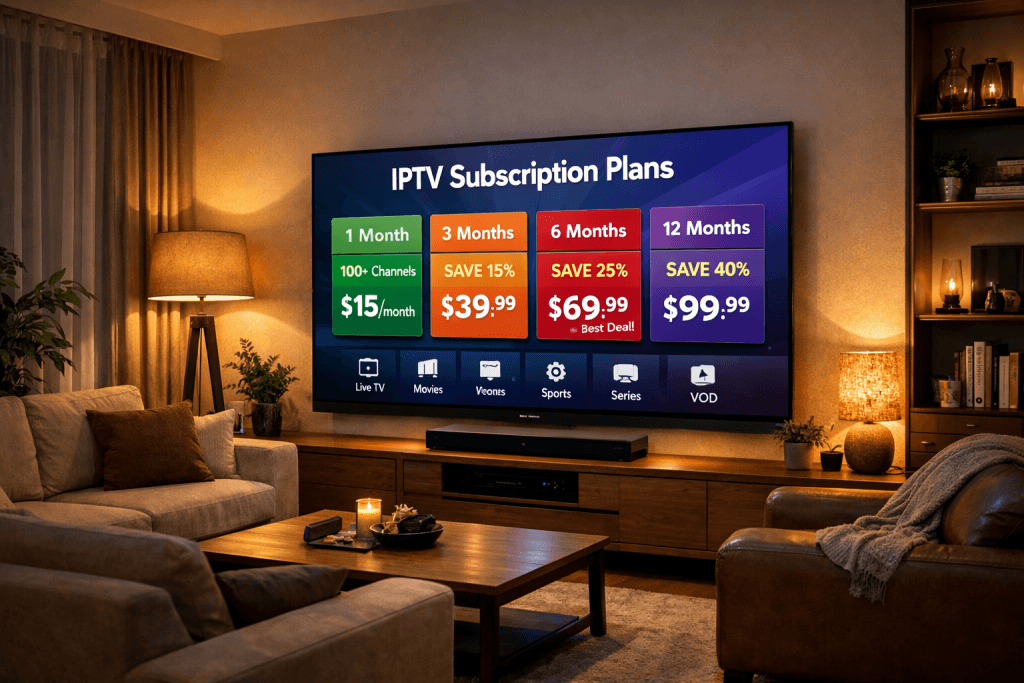
The average American household pays over $127 per month for cable TV, while IPTV subscription plans average just $15.40 monthly—a savings of nearly $1,340 per year. With thousands of channels, flexible pricing structures, and no long-term contracts, IPTV services have become the go-to alternative for cord-cutters. This comprehensive comparison breaks down the most popular IPTV subscription plans, helping you choose a service that matches your budget and viewing preferences.
Understanding IPTV Subscription Plans
Internet Protocol Television (IPTV) delivers television content through internet connections rather than traditional cable or satellite infrastructure. This technology enables providers to offer thousands of channels at a fraction of traditional broadcasting costs, passing savings directly to consumers.
The shift toward IPTV represents more than just cost savings. Users gain access to on-demand content, multi-device compatibility, and international programming that traditional cable services rarely provide. Understanding how these services work helps you evaluate which features matter most for your household.
What is IPTV and How Does it Work?
IPTV service providers transmit television signals as data packets over broadband connections. Your device—whether a smart TV, streaming box, or smartphone—decodes these packets and displays the content in real-time. This differs fundamentally from cable television, which uses dedicated coaxial infrastructure.
The streaming quality depends on three factors: your internet speed, the provider’s server capacity, and the encoding technology they use. Most reputable IPTV services require a minimum 10 Mbps connection for standard definition and 25 Mbps for high-definition streams. You can test your internet speed using Fast.com to ensure your connection meets these requirements.
Pro Tip: Test your internet speed before subscribing to any IPTV service. Inconsistent connections cause buffering issues regardless of how reliable the provider claims to be.
Different Types of IPTV Subscription Plans
IPTV providers structure their pricing around subscription duration and feature sets. According to NerdBot (2026), one-month plans typically range from $12 to $20, while three-month plans cost between $25 and $45. Annual subscriptions offer the deepest discounts, ranging from $65 to $99 per year—equivalent to as little as $5.50 monthly (GeekVibesNation, 2026).
Most services offer tiered access based on channel count, streaming quality, and simultaneous connections. Entry-level plans might include 5,000 channels with one device connection, while premium tiers provide 30,000+ channels with support for five simultaneous streams.
Among the top-rated options, Guru IPTV stands out for its reliability and extensive channel variety, offering competitive pricing across all subscription durations with consistent streaming quality. For more details, you can explore their pricing plans.
Evaluating Streaming Quality and Channel Offerings
Channel quantity means nothing without consistent streaming quality. The best IPTV subscription plans balance extensive content libraries with reliable delivery infrastructure. When comparing providers, examine both the breadth of available channels and the technical capabilities supporting them.
Comparing Channel Lists Across Providers
Channel counts vary dramatically between services. According to BestIPTVFinder (2026), Nomad IPTV delivers 15,000+ channels for $15 monthly, while IPTVON.ME offers an impressive 35,000+ channels at €11.99 per month. These numbers include international programming, sports packages, and premium entertainment networks.
However, raw channel counts can be misleading. Many providers inflate their numbers by including low-quality or duplicate streams. Focus on whether the service includes your must-have channels—local networks, specific sports leagues, or international broadcasts from your home country.
| Provider | Channel Count | Monthly Cost | Key Features |
|---|---|---|---|
| Guru IPTV | 10,000+ | Competitive | Free trial, 99.9% uptime |
| Nomad IPTV | 15,000+ | $15 | Multiple devices |
| IPTVON.ME | 35,000+ | €11.99 | International content |
Assessing the Quality of Streaming
Streaming quality separates premium services from budget alternatives. Top providers like PrimeLiveStreaming and Sonix IPTV claim 99.9% uptime statistics (NerdBot, 2026), meaning service disruptions occur less than nine hours annually. This reliability stems from redundant server infrastructure and content delivery networks.
Resolution quality matters equally. Most modern IPTV services support full HD (1080p) streaming, with leading providers now offering 4K content for select channels. However, higher resolutions demand faster internet connections—4K streams typically require 50 Mbps or more.
Buffer-free viewing depends on server proximity and load balancing. Services with geographically distributed servers provide better performance by routing your connection to the nearest available resource. Ask potential providers about their server locations before committing to longer subscription periods.
Try Guru IPTV Free — No Credit Card Needed
Get instant access to 10,000+ channels with our free trial.
Claim Your Free Trial on WhatsAppAnalyzing Subscription Costs and Hidden Fees
Advertised pricing rarely tells the complete story. Understanding the full cost of IPTV subscription plans requires examining payment structures, additional fees, and value propositions across different commitment levels.
Breaking Down the Costs
Monthly subscriptions offer flexibility but cost more per day than longer commitments. Based on NerdBot (2026) data, one-month plans range from $12 to $20, while three-month subscriptions drop to $25-$45 total—saving $11-$15 compared to paying monthly.
Annual plans deliver the most dramatic savings. At $65-$99 yearly (GeekVibesNation, 2026), subscribers pay the equivalent of $5.50-$8.25 monthly. Over twelve months, this represents savings of $75-$141 compared to month-to-month billing.
$1,340/year
Average savings switching from cable to IPTV (GeekVibesNation, 2026)
Watch for hidden fees that inflate actual costs. Some providers charge extra for premium channels, additional device connections, or DVR functionality. Others include setup fees or require specific hardware purchases. Always request total pricing before subscribing.
Guru IPTV maintains transparent pricing with no hidden charges, and you can contact us on WhatsApp to discuss which plan fits your needs before committing.
Weighing the Benefits of Longer Plans
Despite attractive annual discounts, TroyPoint (2026) recommends month-to-month payments due to uncertain future reliability. IPTV services occasionally shut down unexpectedly, leaving annual subscribers without recourse. This counterdata highlights a crucial trade-off between savings and risk management.
The solution involves starting with monthly or quarterly plans while evaluating service quality. After confirming consistent performance for several months, longer commitments become less risky. This approach costs slightly more initially but protects against total loss if a provider disappears.
Free trial periods eliminate much of this uncertainty. Testing a service for 24-48 hours reveals streaming quality, channel availability, and interface usability before payment. Not sure which plan fits you? Reach out on WhatsApp and claim your free trial today.
Watch Out: Avoid providers requesting payment through cryptocurrency only or those refusing refunds under any circumstances. These red flags often indicate unreliable services.

The Importance of Regional Availability and Uptime Statistics
Geographic location affects both content accessibility and streaming performance. Regional availability determines which channels you can access, while server distribution impacts connection reliability and speed.
Regional Availability Impact
IPTV providers restrict certain content based on licensing agreements and broadcasting rights. Sports channels particularly suffer from geographic limitations—a service might offer NFL Sunday Ticket in the United States but not in European markets.
International users seeking home-country programming should verify specific channel availability before subscribing. A provider advertising “10,000 channels” might include only 200 relevant to your region. Request channel lists filtered by country or language to assess actual value.
Server locations also affect legal compliance. Services operating servers in your country generally provide better performance and face lower regulatory risks than those routing connections through offshore infrastructure.
Evaluating Uptime and Service Consistency
The 99.9% uptime claimed by leading providers (NerdBot, 2026) translates to approximately 8.7 hours of downtime annually. While impressive, this metric only measures complete service outages—it doesn’t account for degraded performance, buffering issues, or individual channel failures.
Examine user reviews for patterns indicating reliability problems. Frequent complaints about weekend outages or issues during major sporting events suggest inadequate server capacity. Consistent praise for stability, even during peak viewing hours, indicates solid infrastructure.
- Server redundancy: Multiple backup servers prevent single points of failure
- Load balancing: Distributes user connections across available resources
- Content delivery networks: Regional caching reduces latency and buffering
- Monitoring systems: Automated alerts enable rapid response to technical issues
User Reviews: What Subscribers Are Saying
Real customer experiences provide insights that marketing materials never reveal. User reviews expose common problems, highlight exceptional features, and help set realistic expectations about IPTV subscription plans.
Analyzing User Feedback
Customer support responsiveness dominates positive and negative reviews alike. Subscribers consistently praise providers offering 24/7 live chat support and criticize those relying solely on email ticketing systems. When technical issues arise—and they inevitably do—immediate assistance prevents hours of frustration.
Channel reliability emerges as another recurring theme. Users frequently complain when advertised channels frequently buffer or disappear without notice. The best services maintain consistent channel availability and promptly notify subscribers about temporary outages.
Pros
- Massive cost savings vs cable
- Thousands of international channels
- Multi-device compatibility
- No long-term contracts required
- On-demand content libraries
Cons
- Service reliability varies widely
- Legal gray areas in some regions
- Requires stable internet connection
- Setup complexity for non-technical users
- Potential for provider shutdowns
Highlighting Positive Experiences
Satisfied customers frequently mention streaming quality that matches or exceeds traditional cable. High-definition clarity without compression artifacts indicates proper encoding and sufficient bandwidth allocation. These positive experiences correlate strongly with providers investing in modern infrastructure.
Interface design also generates enthusiastic feedback. Intuitive channel guides, reliable electronic program guides (EPG), and quick channel switching enhance daily usability. Services with dedicated apps for popular platforms (Fire TV, Android TV, iOS) receive particular praise for convenience. For setup guidance, check out our Firestick setup guide.
Customer Support: Ensuring a Reliable IPTV Experience
Technical issues affect even the most reliable IPTV services. Responsive customer support transforms minor inconveniences into quick resolutions, while poor support ruins otherwise excellent services.
Importance of Customer Support
Setup assistance proves crucial for less technical subscribers. Many users struggle with initial configuration, particularly when installing services on unfamiliar platforms. Providers offering guided setup through live chat or video calls significantly reduce early cancellations.
Ongoing troubleshooting support maintains satisfaction throughout the subscription period. Buffering issues, login problems, and channel availability questions require prompt resolution. Services with average response times under one hour retain customers significantly better than those taking days to reply.
Comparing Support Options
Support channels vary from basic email tickets to comprehensive 24/7 live assistance. The most customer-friendly services provide multiple contact methods—live chat, WhatsApp messaging, email tickets, and detailed knowledge bases.
- Test support before subscribing: Send a pre-sales question and evaluate response time and helpfulness
- Check available hours: 24/7 support matters if you watch content outside standard business hours
- Assess language options: Ensure support staff communicate fluently in your preferred language
- Review refund policies: Reasonable money-back guarantees indicate confidence in service quality
Pro Tip: Screenshot error messages and note the exact time problems occur. This information helps support teams diagnose issues much faster than vague descriptions.
Legal Considerations When Choosing an IPTV Provider
The IPTV industry operates in complex legal territory. Understanding potential risks helps you select legitimate services and avoid providers operating outside legal boundaries.
Understanding Legal Implications
Legitimate IPTV services obtain proper licensing for content they distribute. These providers pay broadcasters for retransmission rights, similar to how cable companies operate. Unlicensed services pirate content without compensation, creating legal exposure for providers and potentially for subscribers.
Consumer protection in IPTV markets remains limited compared to traditional cable services. If a provider shuts down unexpectedly, recovering prepaid subscription fees proves difficult or impossible. This reality makes payment method selection—credit cards with chargeback protection versus non-refundable cryptocurrency—particularly important.
Research provider backgrounds before committing. Established companies with verifiable business addresses and transparent ownership structures present lower risk than anonymous services operating through offshore shell companies. According to Wikipedia’s IPTV overview, legitimate services clearly display licensing information and comply with regional broadcasting regulations.
Protecting Yourself as a Consumer
Start with shorter subscription periods when trying new providers. Monthly plans cost more per day but limit exposure if the service proves unreliable or shuts down unexpectedly. After confirming legitimacy and quality, longer commitments become more appropriate.
Verify that providers clearly state their licensing status and content sources. Legitimate services openly discuss partnerships with content creators and broadcasters. Vague statements about content origins or explicit mentions of “unofficial” streams indicate potential legal issues.
- Research company registration: Legitimate businesses provide verifiable registration information
- Check payment security: SSL encryption and recognized payment processors indicate professionalism
- Read terms of service: Legal services clearly outline user rights and provider responsibilities
- Verify refund policies: Reasonable money-back guarantees suggest confidence in service legality
Why Guru IPTV Stands Out Among Subscription Options
When comparing IPTV subscription plans, certain providers distinguish themselves through superior features, competitive pricing, and customer-focused policies. Guru IPTV exemplifies these qualities with a service designed around user satisfaction.
Unique Features of Guru IPTV
Guru IPTV delivers 10,000+ channels spanning sports, entertainment, news, and international programming at highly competitive rates. The extensive channel list covers major networks from North America, Europe, Asia, and the Middle East, ensuring diverse content for global audiences.
The service maintains the 99.9% uptime standard expected from premium providers while offering pricing that rivals budget alternatives. This combination—enterprise-grade reliability at consumer-friendly costs—positions Guru IPTV as an exceptional value proposition.
| Feature | Guru IPTV | Industry Average |
|---|---|---|
| Channel Count | 10,000+ | 8,000-15,000 |
| Uptime Guarantee | 99.9% | 95-99% |
| Free Trial | Yes | Varies |
| Customer Support | 24/7 via WhatsApp | Email only |
| Setup Difficulty | Guided assistance | Self-service |
Multi-device compatibility ensures you can watch content on smartphones, tablets, smart TVs, streaming boxes, and computers. Simultaneous streaming on multiple devices means different household members can enjoy separate content without conflicts or additional fees.
User Satisfaction and Support
Customer support accessibility separates Guru IPTV from competitors. The 24/7 WhatsApp support system provides immediate assistance for technical questions, billing inquiries, and troubleshooting needs. This direct communication channel eliminates the frustration of waiting days for email responses.
The free trial policy demonstrates confidence in service quality. Rather than requiring immediate payment commitments, Guru IPTV lets potential subscribers test streaming quality, explore channel offerings, and evaluate interface usability before financial commitment. This risk-free evaluation period builds trust and ensures satisfaction.
For more information about IPTV subscription pricing and trial access, visit the Guru IPTV website to explore plan options tailored to different viewing needs and budgets.
Ready to Cut the Cord?
Join thousands of satisfied Guru IPTV subscribers. Start your free trial today — no commitment required.
Contact Us on WhatsAppMaking the Right IPTV Choice
Selecting among IPTV subscription plans requires balancing cost, features, reliability, and support. The dramatic savings compared to traditional cable—averaging over $1,300 annually—make IPTV financially attractive, but service quality varies significantly between providers.
Prioritize providers offering free trials, transparent pricing, responsive customer support, and verifiable uptime statistics. Start with shorter subscription periods to evaluate performance before committing to annual plans. This approach minimizes risk while allowing you to identify services that genuinely meet your viewing needs.
The future of television consumption clearly favors internet-based delivery over traditional broadcasting infrastructure. As IPTV technology matures and more legitimate providers enter the market, service quality will continue improving while prices remain dramatically lower than cable alternatives.
Bottom line: IPTV subscription plans deliver massive savings and superior flexibility compared to cable, but choosing a reliable provider with responsive support and proven uptime statistics ensures you actually enjoy those benefits rather than fighting technical problems.